Inside my UX case study

TalentPay:

Rethinking freelancing.

A UX case study exploring a fairer freelancing experience for Indian freelancers.

UX Research

Product Strategy

UI/UX Design

I had spent years freelancing.

So I started asking: what could make the experience better?

I had spent years freelancing. So I started asking: what could make the experience better?

Watch me walk through TalentPay, a freelancing platform concept shaped by research into the challenges freelancers face.

A quick look at the research, product strategy, user journeys, and design decisions behind the concept.

Short on time? Watch at 1.25× speed.

Short on time? Watch at 1.25× speed.
THE PROBLEM

Freelancing offers freedom.

But not always security.

Research approach

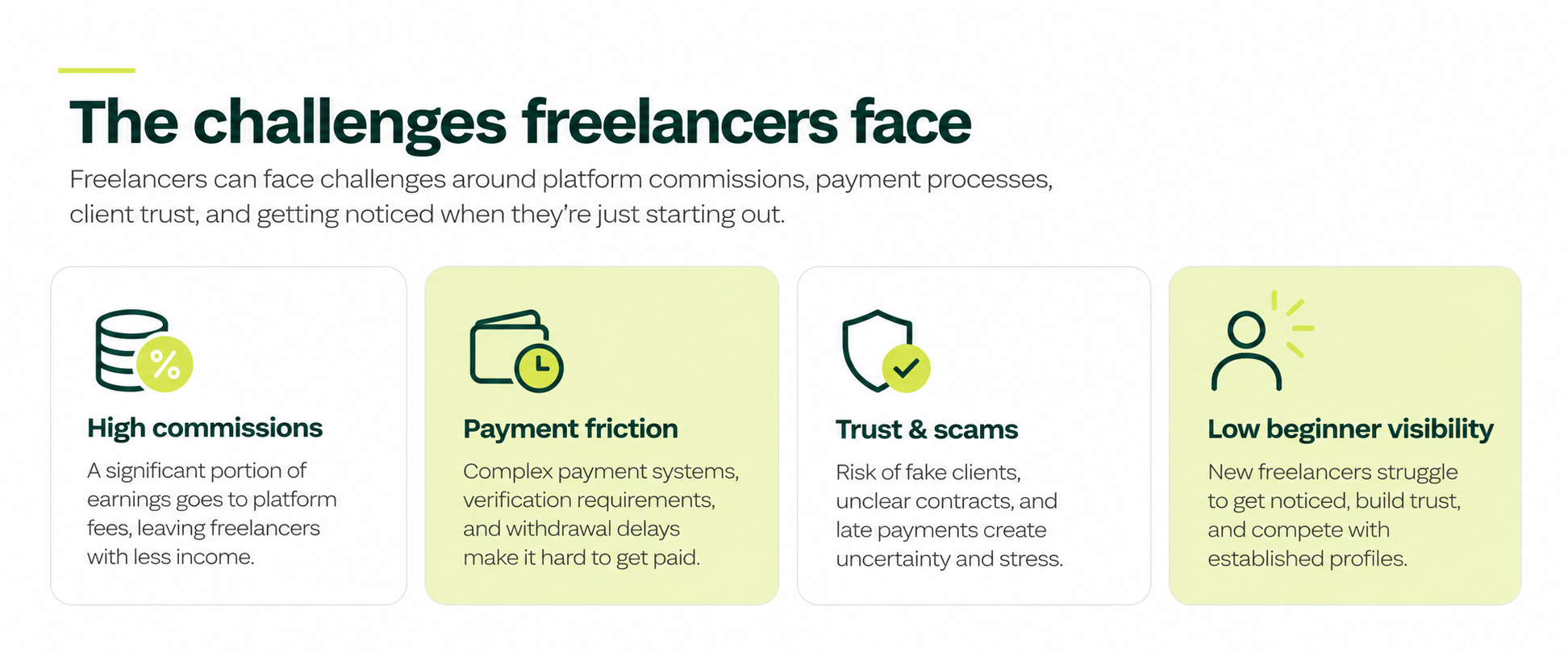
I used primary and secondary research to understand the challenges Indian freelancers face across existing platforms. My research included a survey, in-depth interviews, a focus group, and competitor analysis.

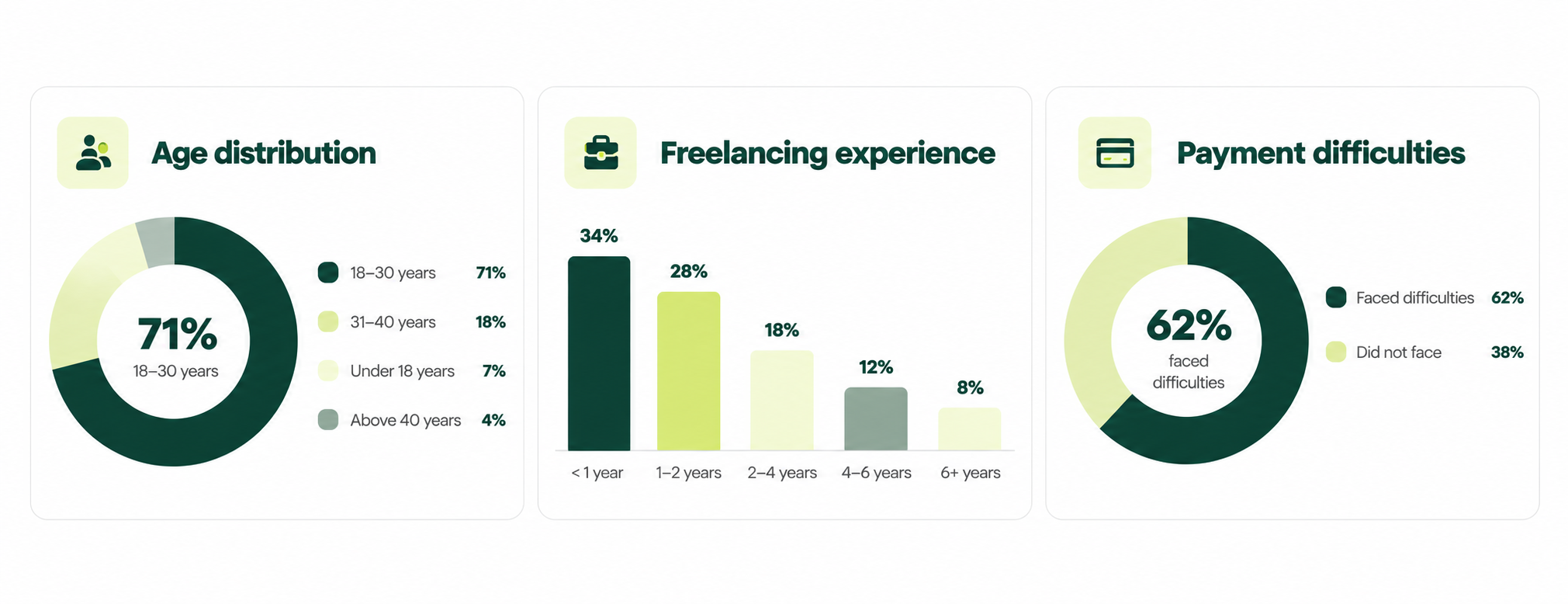
Survey findings

Most respondents were young, and many were early in their freelancing journey. High commissions, payment difficulties, undervaluation, and finding consistent work emerged as key concerns.

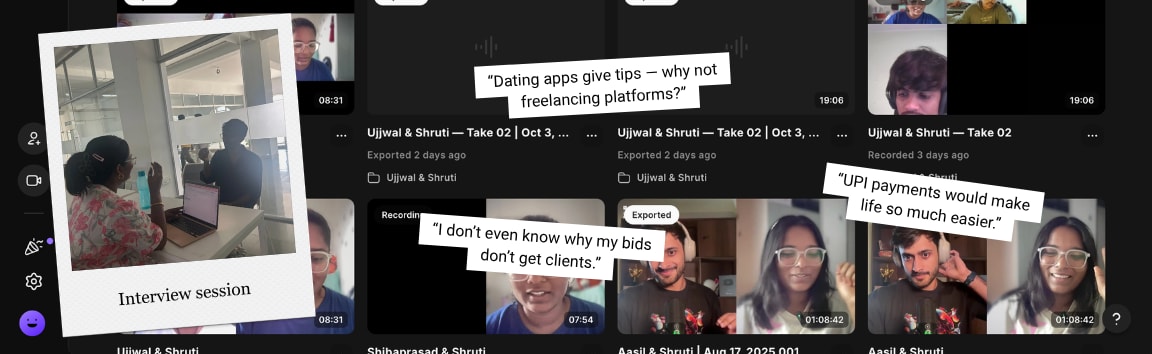
Interviews and focus group

Five interviews and a focus group with five freelancers helped me explore real experiences with payment barriers, scams, client expectations, pricing, and the struggle to get noticed.

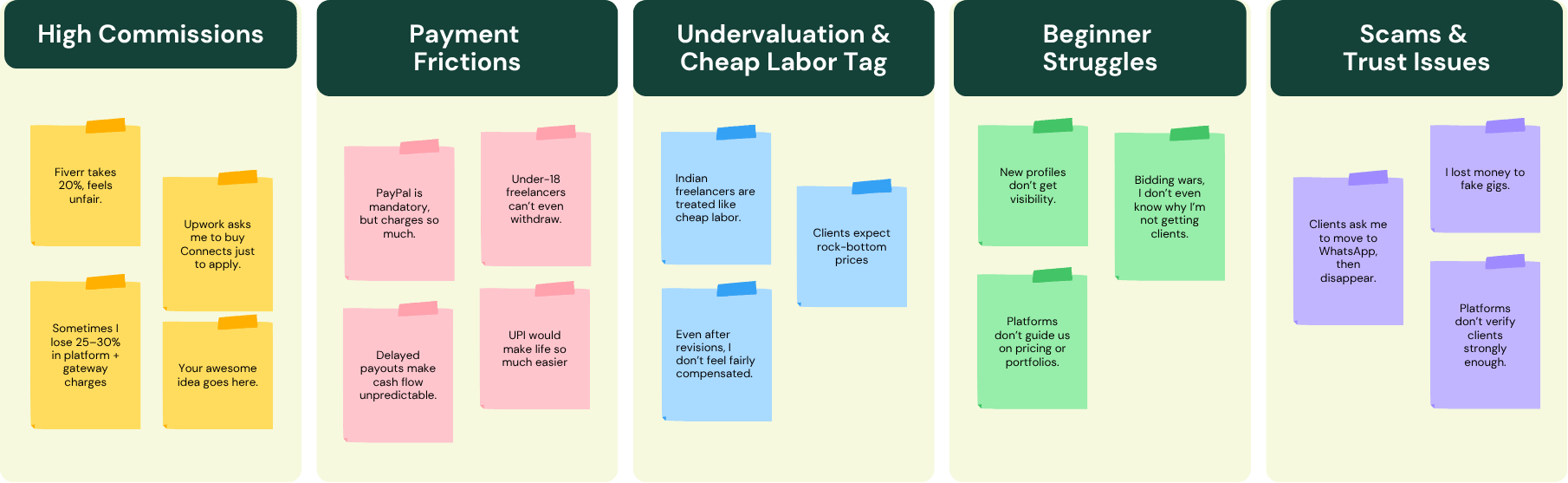
Finding patterns across the research

I used affinity mapping to bring together findings from the survey, interviews, and focus group. The patterns pointed to five key areas: fees, payment friction, trust and safety, beginner visibility, and guidance and recognition.

Problem definition

Turning research into a clear problem

Indian freelancers, especially students and early-career professionals, struggle with high commissions, complex payouts, scams, and poor visibility. These challenges can lead to income loss, payment delays, and undervaluation.

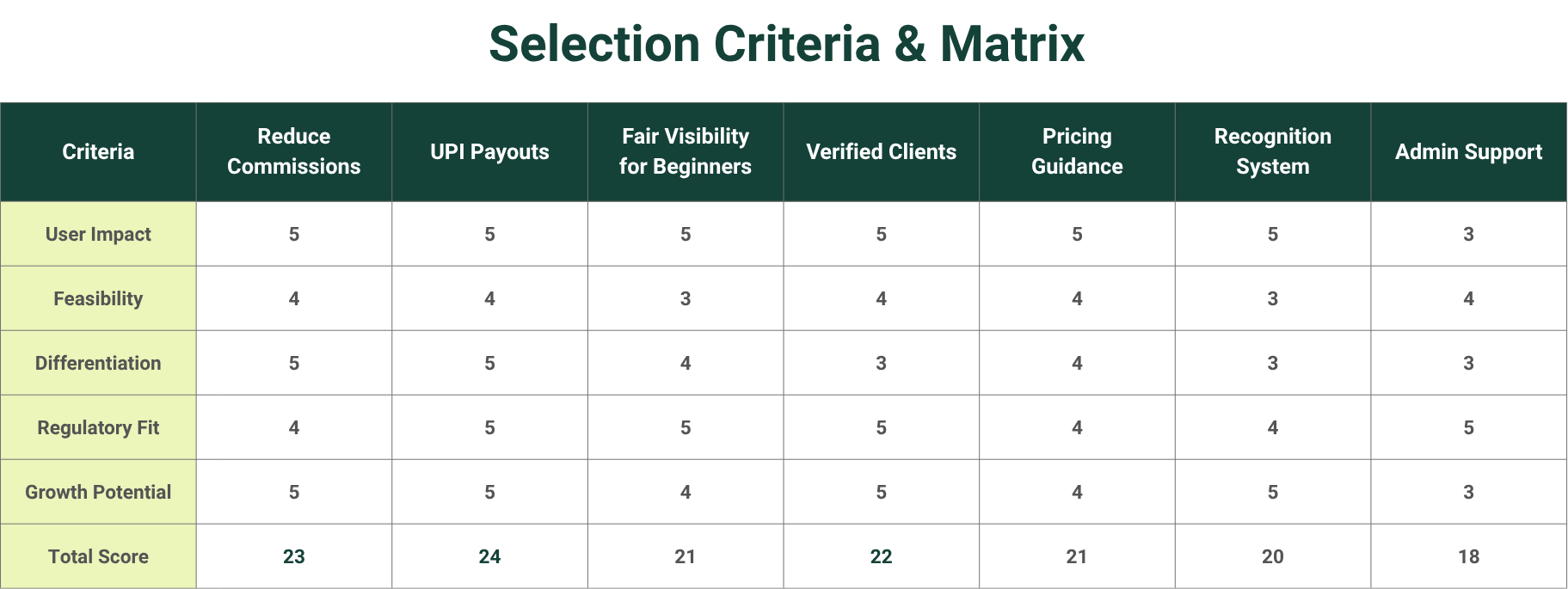
From insights to TalentPay

The research informed an India-first freelancing platform concept built around fairer commissions, UPI-first payouts, verified clients, beginner-friendly growth, and community support.

Usability testing

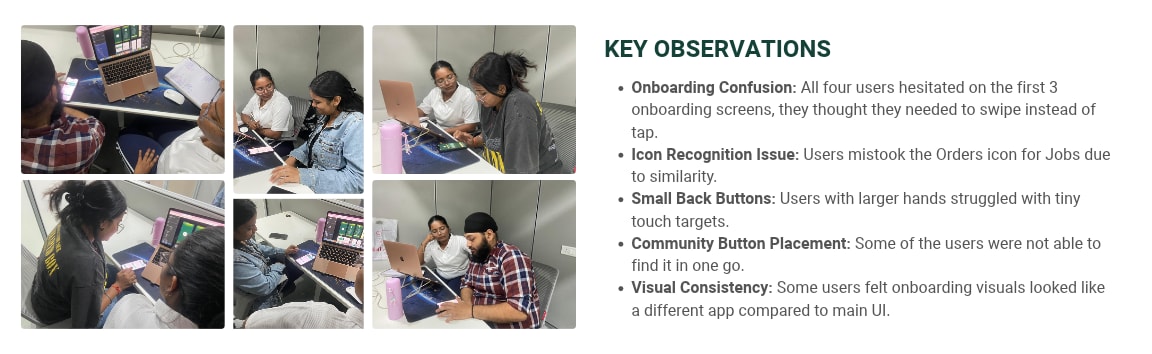
I tested the high-fidelity prototype with four participants aged 20–26. Their feedback revealed issues with onboarding interactions, icon recognition, touch-target sizes, community navigation, and visual consistency.

Inside my UX case study

TalentPay: Rethinking freelancing.

A UX case study exploring a fairer freelancing experience for Indian freelancers.

UX Research

Product Strategy

UI/UX Design

I had spent years freelancing.

So I started asking: what could make the experience better?

Watch me walk through TalentPay, a freelancing platform concept shaped by research into the challenges freelancers face.

Short on time? Watch at 1.25× speed.
THE PROBLEM

Freelancing offers freedom.

But not always security.

Research approach

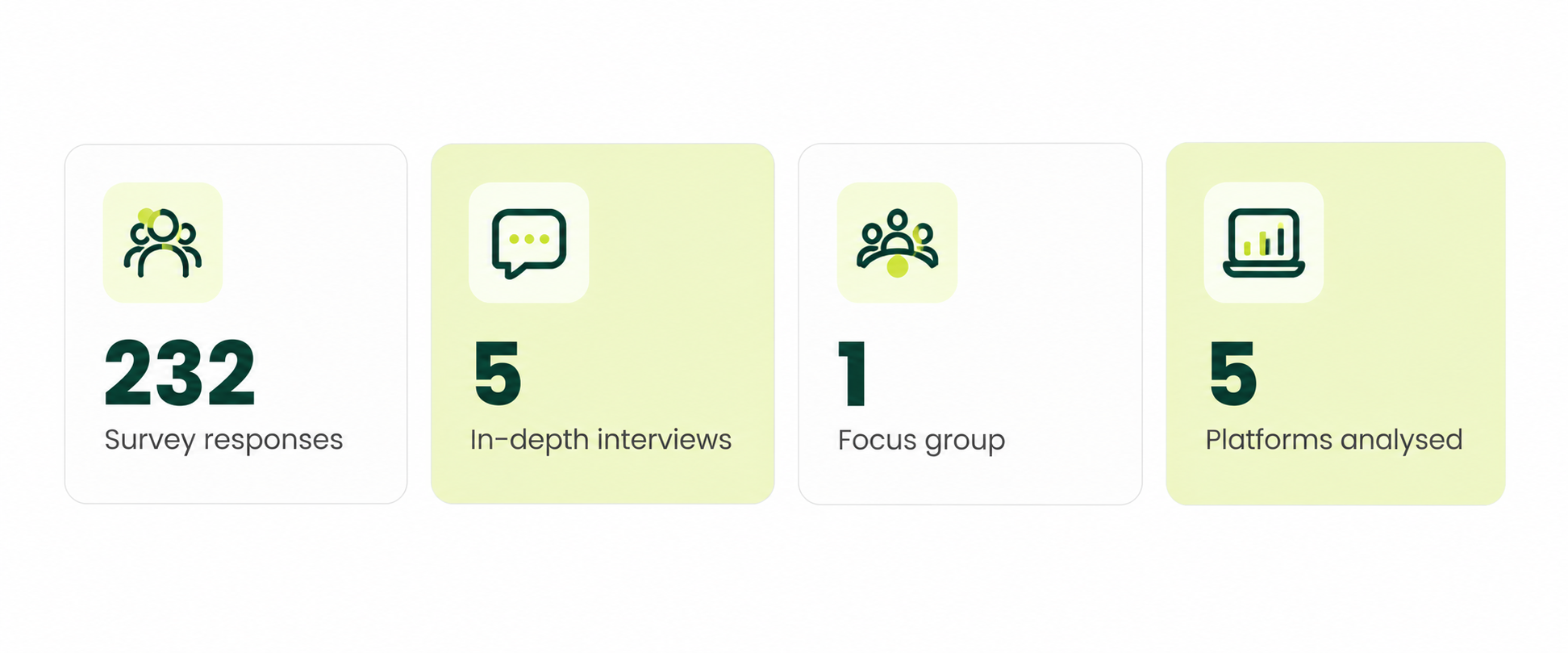
I used primary and secondary research to understand the challenges Indian freelancers face across existing platforms. My research included a survey, in-depth interviews, a focus group, and competitor analysis.

Survey findings

Most respondents were young, and many were early in their freelancing journey. High commissions, payment difficulties, undervaluation, and finding consistent work emerged as key concerns.

Interviews and focus group

Five interviews and a focus group with five freelancers helped me explore real experiences with payment barriers, scams, client expectations, pricing, and the struggle to get noticed.

Finding patterns across the research

I used affinity mapping to bring together findings from the survey, interviews, and focus group. The patterns pointed to five key areas: fees, payment friction, trust and safety, beginner visibility, and guidance and recognition.

Problem definition

Turning research into a clear problem

Indian freelancers, especially students and early-career professionals, struggle with high commissions, complex payouts, scams, and poor visibility. These challenges can lead to income loss, payment delays, and undervaluation.

From insights to TalentPay

The research informed an India-first freelancing platform concept built around fairer commissions, UPI-first payouts, verified clients, beginner-friendly growth, and community support.

Usability testing

I tested the high-fidelity prototype with four participants aged 20–26. Their feedback revealed issues with onboarding interactions, icon recognition, touch-target sizes, community navigation, and visual consistency.